Agroecology sets roots in Chipinge youth


BY TRUST BVARANGA
IN Chipinge town, Zimbabwe, a pioneering group of farmers has embarked on a transformative journey, adopting agroecology as their guiding principle for farming. This innovative approach prioritises soil health, biodiversity, and efficient water management, paving the way for a more resilient and productive farming community.
Agroecology refers to the application of ecological principles to the design, management, and evaluation of agricultural systems. It aims to create sustainable and environmentally friendly farming practices that prioritize soil health, biodiversity, and efficient water use
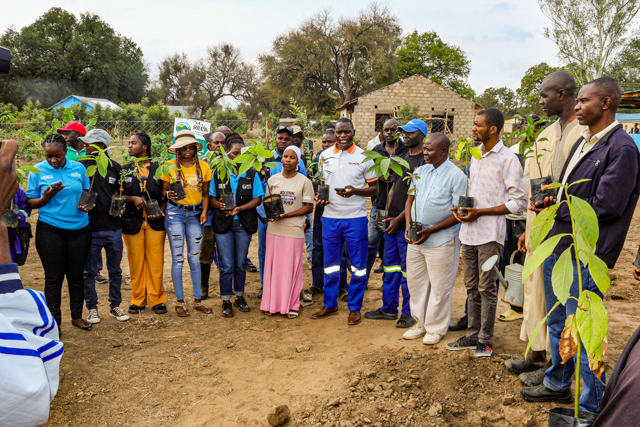
On August 19 and 20, a group of farmers gathered in Chipinge town to share experiences skills on agroecology. The worshop that is coordinated by The Green Institute with support from IM Swedish Develoipment Partner (IM) was attended by youth from Chipinge ward 19, 17, 3, 5 and 24.
The agroecology training was facilitated by Augustine Njirayegaza. It managed to equip knowledge and skills to a big number farmers and board of directors of youth led organisations in Chipinge. Participants managed to learn techniques that include crop rotation, organic fertilizer production and integrated pest management, reducing their reliance on chemical inputs and enhancing soil health.
“Agroecology promotes biodiversity and ecosystem services, efficient water management, and integrated pest management. By embracing this holistic approach, farmers are improving their livelihoods and contributing to a more sustainable future” divulged Augustine.

A farmer, Fortune Mada, from Checheche in Chipinge rural ward 24 appreciated what she learnt.
“I am quite fascinated to the positive impact of agroecology on our farming practices. I have learned techniques to maintain soil health, structure, and fertility through the use of organic amendments, mulching, and cover cropping.
“This will enable our soils to become more fertile and strong considering the soil type that we have in the dry, hot Natural Region 5 of Checheche in Chipinge South. This training is so imperative and has made think wisely,” she said.
As the program continues to grow, it is clear that the green revolution is setting roots in Chipinge and Chimanimani.

Post Comment