REPSSI champions social wellbeing of PwDs

BY STEVE EPHRAEM
In the world of disability inclusivity, a key ingredient is often overlooked, one that a specialist likens to the baking powder in a cake.
“Baking powder is a small element, but it is the one that allows the mixture to rise to its full glory. Without it, there is no cake,” explained an official from the Regional Psychosocial Support Initiative (REPSSI).
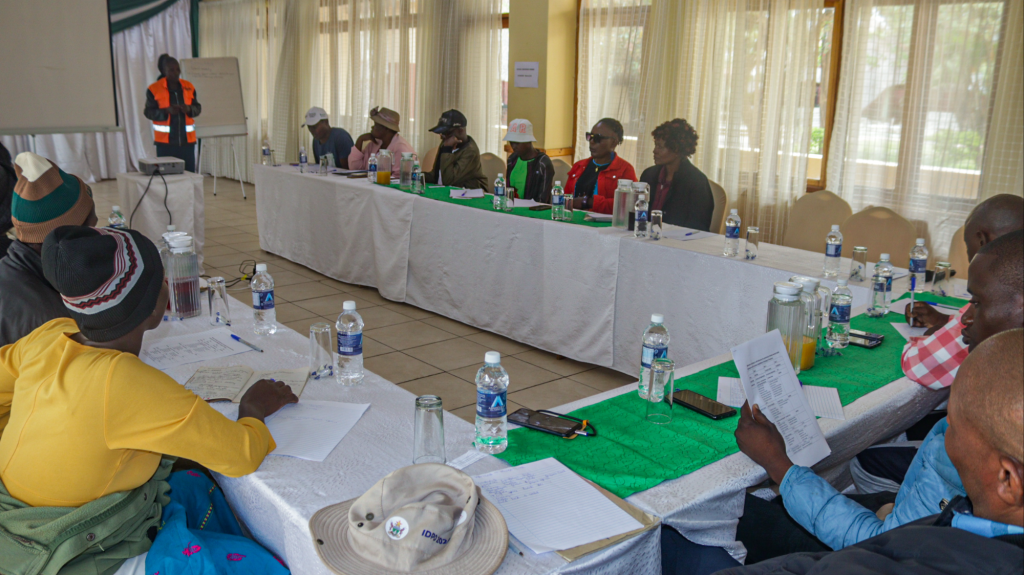
This vital component is psychosocial support, and championing its role in the mental wellbeing of Pesrons wirh Disabilities (PwDs), was the focus of a training workshop that was held on September 30 and October 1, 2025 in Mutare.
It was attended by disability champions, officials from Department of Social Development and District Development Coordinators from Chimanimani and Chipinge.

The workshop aimed at reshaping how communities care for Persons with Disabilities.
Contrary to complex clinical therapy, this form of care was presented as a fundamental practice built on daily doses of love, care, and protection. It is the network of family, friends, teachers, and neighbours who provide a essential lifeline by actively listening to the feelings of Persons with Disabilities, helping them understand their own history, and crucially, inviting them to participate in decisions that shape their lives.
To illustrate this holistic approach, participants explored two different models of care the first one being the “Wheel Model” that places the child firmly at the centre, with all aspects of their world; from government policy to community culture; spiking outwards, designed to work in concert for the child’s benefit.
This was contrasted with the “Pyramid Model,” where support is tiered. Its wide base is built on universal access to basic services and security, upon which rests strong family and community support. More focused help is available for those with specific needs, with only a few children requiring the specialised services at the pyramid’s peak.
In conclusion, REPSSI outlined that a Persons with Disabilities cannot be helped in isolation. True psychosocial support, is inseparable from their protection. Disability champions were thus asked to put into practice what they learnt from the training workshop.


Post Comment