AFDB funding improves refugees’ livelihoods

BY STEVE EPHRAEM
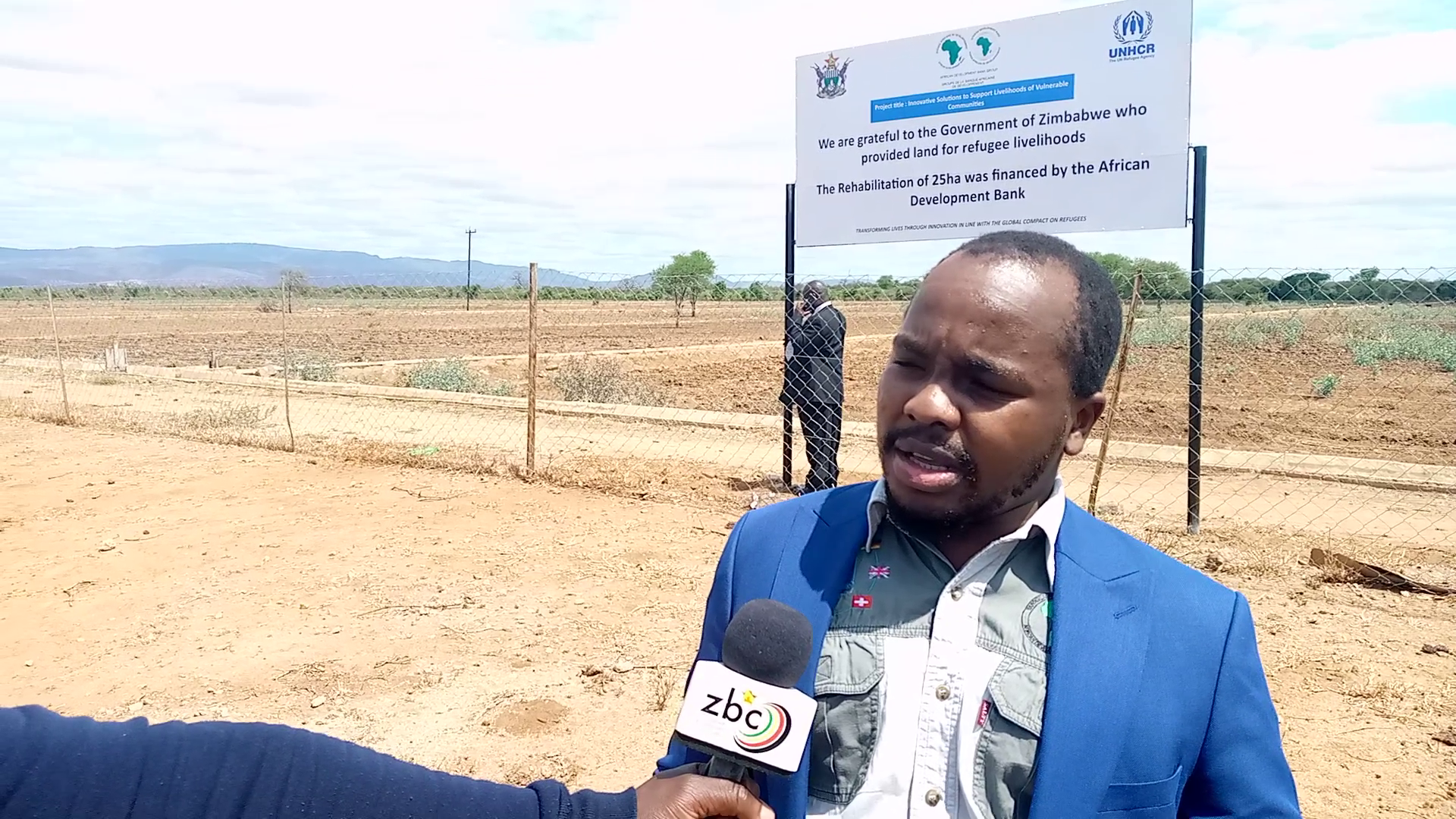
FINANCIAL support that was given to Tongogara Refugee Camp in Chipinge by the African Development Bank Group (AFDB) has seen the livelihoods of refugees and asylum seekers, as well as those of host communities, transforming for the better.
AFDB funded the construction of a 2.1km water pipeline and a 3.5km irrigation canal network under a project titled “Innovative Solutions to Support Livelihoods of Vulnerable Communities” and was implemented in line with the Global Compact on Refugees.
Speaking to this publication during a tour of Tongogara Refugee Camp on 20 October 2021, AFDB Senior Policy Analyst, Erick Mariga, indicated that the project was themed on empowering refugees.
“This project is aimed at providing water to empower refugees to become economically sustainable, and this is in line with Government policy of the National Development Strategy. Some of the key result areas of the strategy include self-reliance and employment creation.
“Another project implemented was that of solar lighting, which helps reduce Human-Wildlife Conflict as well as Gender-Based Violence in the camp. We sank solarised boreholes, which help supply water for farming and entrepreneurship,” said Mariga.
According to Chipinge District Development Coordinator, William Mashava, the funding has also benefitted host communities.
“We continue to observe great strides of inclusivity, where the developments taking place in the camp are also extended to the host communities. We are grateful for the water projects that were extended to Maronga and Musapingura primary schools, as well as Gumira Clinic. This gesture has completely and positively changed the way of life at the three institutions and neighbouring villages,” said Mashava.
Commissioner for Refugees, Joseph Tirivavi, highlighted that the AFDB funding goes a long way in building resilience.
He said, “The projects have increased food security for refugees and the host community. It has built resilience and helps to ease the burden on the Government and development partners, so that refugees will be self-reliant rather than dependent on aid.”
Statistics released recently show that Tongogara Refugee Camp is home to 14,542 refugees and asylum seekers; 75 percent are from the Democratic Republic of Congo, 11.07 percent from Mozambique, 6.2 percent from Burundi, 4.7 percent from Rwanda, and 2.53 percent from smaller communities.


Post Comment