Farmers propose a sui generis system of recognising and protecting farmer seed varieties

BY STEVE EPHRAEM
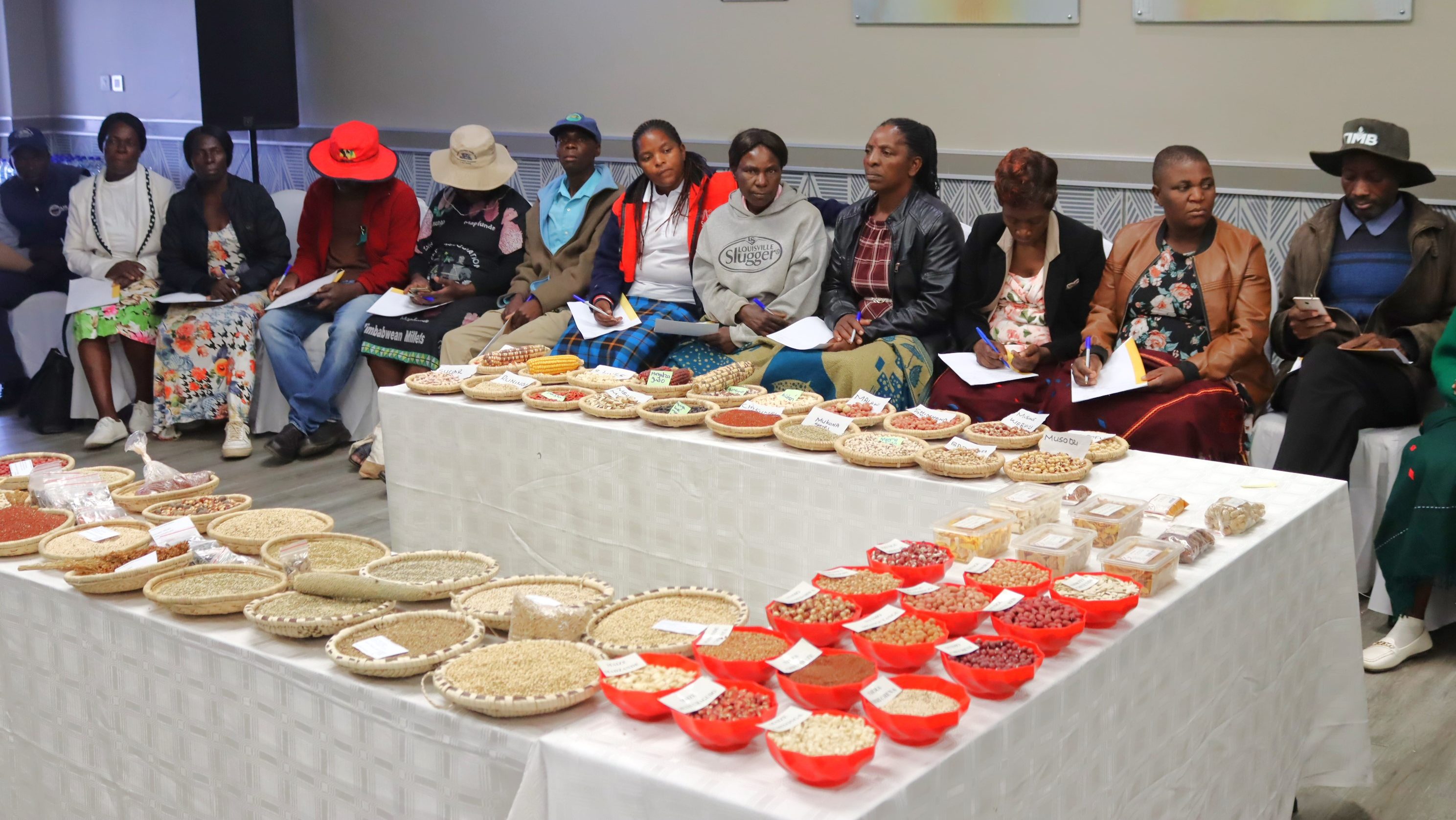
AGROECOLOGICAL farmers in Zimbabwe are proposing a sui generis (of its own kind) system of recognising and protecting farmer seed varieties. Farmers in Zimbabwe converged on for a one-day indaba at a hotel in Harare to map the way forward.
In his opening remarks, Participatory Ecological Land Use Management (PELUM) Zimbabwe Programmes Coordinator, Theophilus T. Mudzindiko indicated that farmer managed seeds have been feeding communities for centuries before they were disqualified by prohibitive policies.

“The farmer managed seed system has been feeding the nation from the time of our grandfathers up to this day. I am happy that as farmers we have been multiplying local seed varieties and we have managed to protect them to this day. We are hoping that as we journey through the Zimbabwe Seed Sovereignty Programme, we shall see seed policies being revised in order to strengthen our local farmer seed varieties,” he said.
Today’s meeting is being held following a study commissioned by PELUM Zimbabwe to inform guidelines for a sui generis system of recognising and protecting farmer seed varieties. The study was carried out in five districts of Zimbabwe.
The study had the following specific objectives: 1. Map the local seed diversity in 5 districts according to gender preferences; 2. Define important priority attributes which farmers use to define and separate their seeds; 3. Discuss and develop procedures for recognising local varieties/ seeds at local, community and national levels; 4. Come up with a policy brief on the need to recognise local seed diversity, that will contribute to the formulation of appropriate policies in support of local seed systems.

Post Comment